
OnlyFans or Substack?—or, why identity politics won't protect the dolls
Whether that ‘link in bio’ leads to OnlyFans or Substack it is always our bodies they come looking for.

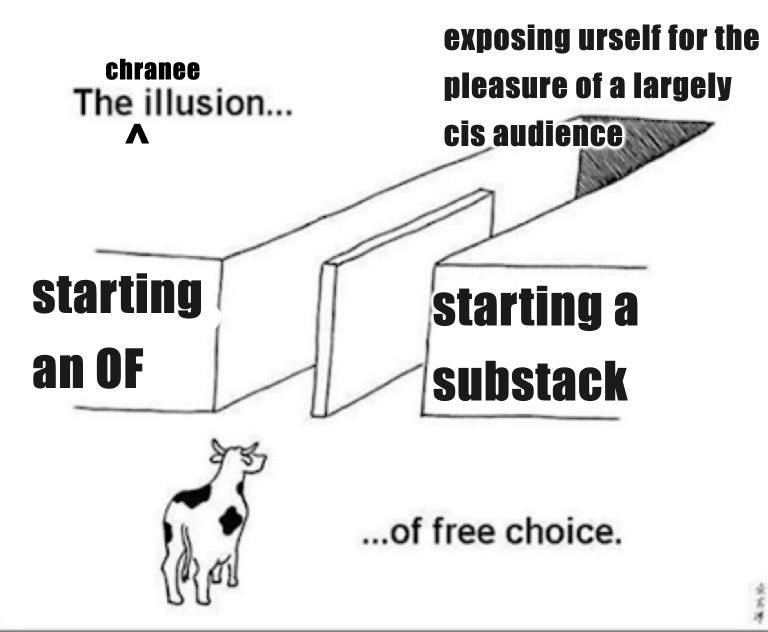
This week a friend sat in my living room and complained to me about his current struggle to find work before holding his hands up and exclaiming, “I’m a cis male. It’s just not my time.”
Bro. When was it ever not your time?
The ‘not my time’ was said with a shrugging acceptance as though he was gracefully accepting this loss of privilege in order to balance out the (trans)misogyny of what? the whole fucking history of humankind? He was the victim of sexism but he also got to be the hero for gallantly accepting and understanding the sacrifice. He was one of the good ones. I should show him some pity from my lofty position of power as the star child of DEI—a transexual woman.
The most recent rejection he had received was for a social worker position in a high school. There are countless jobs I would not even consider applying for, not for lack of qualification but due to fear of the relentless scrutiny and bullying I could expect to suffer. This includes any job in a high school. In fact, any job working with children or vulnerable people currently feels too risky for me. There is a relentless campaign right now to frame all queer people, but especially trans women, as predators and groomers. Working in these environments would be hellishly exhausting for me.
I am now at a point in my transition where I could potentially attempt to apply and enter a job stealth (something I am told is a privilege) but can you imagine the strain this would place on me? Not to mention all manner of problems it would create in any application process due to me subsequently being unable to offer any references prior to my transition. I would also have to lie to my employer about any time I might need off for surgeries and other procedures related to my transition.
So where and how do I find work?
When I left university I took a full time job in the offices of a blue-chip gallery, I lasted six months before handing in my notice. It was horrific. Since then I have worked freelance, mostly as an art technician, finding work through a network of peers who are either themselves queer or are hopefully somewhat politically aligned with me. It is a narrow network and it never guarantees a safe working environment. Identity politics may have changed the ‘discourse’ within art spaces, creating the illusion that these are ‘safe spaces’ for people like me to work, but identity politics does not concern itself with questions of class. The discourse so present in the programming of these spaces rarely extends to or affects the space’s working conditions. I do not know of any other female art technicians currently working in Zurich. I know of one other trans person working as a technician, a trans masc who sometimes choses to enter new work places stealth. I have never entered a job stealth, but I have sat through my lunch break while a cis male colleague asks me countless questions about my genitalia and whether I want to ‘have the surgery’.
Being freelance is low commitment in terms of work relations. If I don’t feel safe I am not contractually obliged to come back in tomorrow. Financial obligations of course often negate this apparent flexibility and safety. It is precarious work.
I work almost exclusively within the arts but I make next to nothing from my own art. Identity politics has led to some increase in opportunities for artists from ‘minority’ groups. This has been largely restricted to spaces outside of the commercial art world, by which I include, alongside commercial galleries, the large museums that are run to benefit the portfolios of a handful of collectors. The embrace of identity politics by certain art spaces has led to a visible increase in the number of disabled/trans/BIPOC artists exhibiting. These intersecting categories encompass a huge amount of people who are forced to fight for a handful of opportunities.
The opportunities handed down to ‘minorities’ are given on the expectation that these artists present work solely about their identity. It is our identity that got us through the door and so we are expected to sell it now we are inside. We are invited to exhibit and perform but let’s be clear, this is the gig economy, such opportunities do little to change the demographic of less visible but, more importantly, less precarious positions such as curatorial and organisational fixed term contracts and they do even less to change positions of power such as the directors and board members of art spaces.
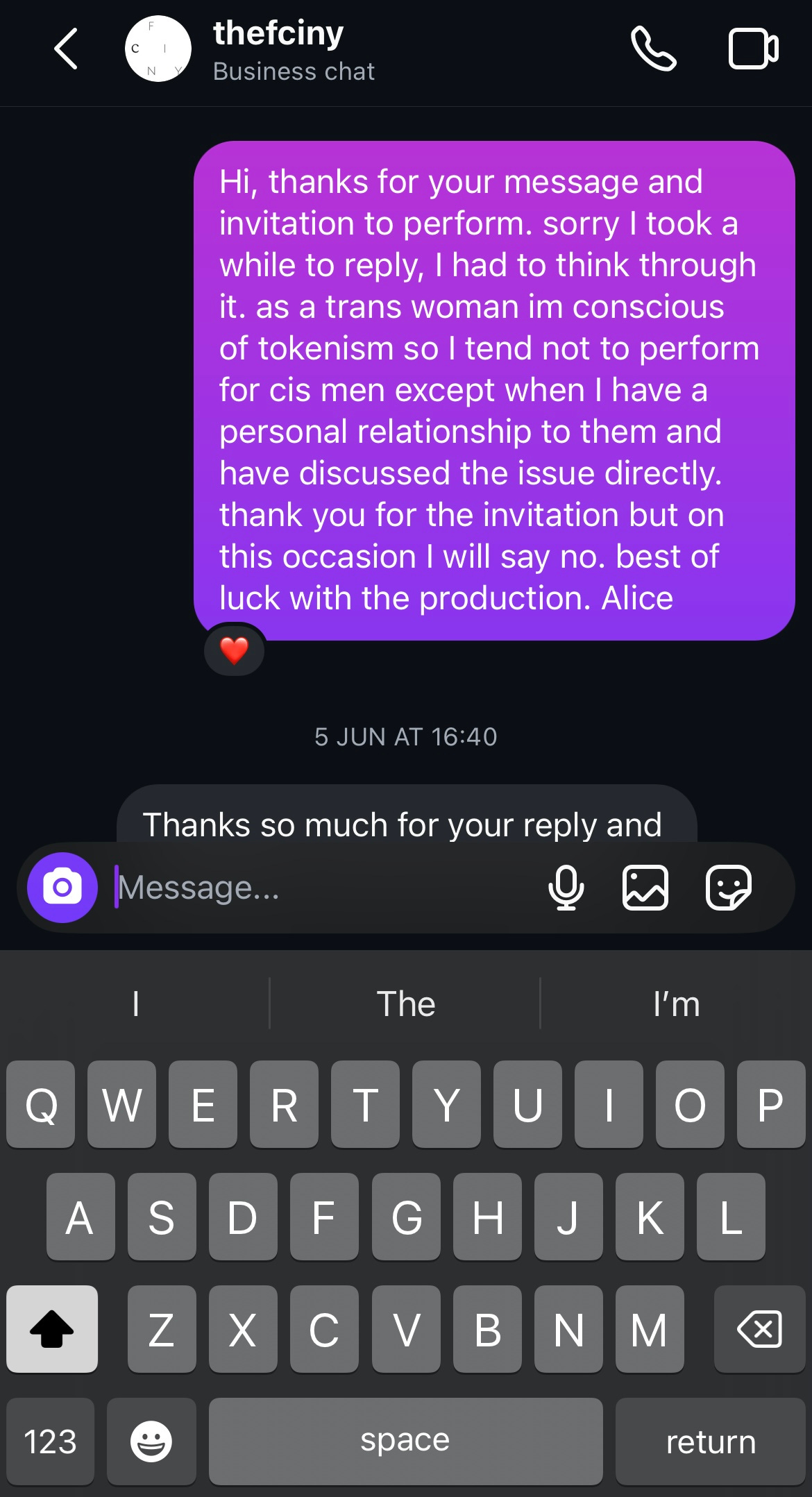
I am among the group of people who seemingly ‘benefit’ from this exposure. Very few of us have managed to turn it into something sustainable in the long term. Most are simply burnt out and spat out. Such opportunities do next to nothing in terms of changing the material or class realities of disabled, trans and BIPOC artists. They do not create the financial security that a practice needs to flourish. And they do not provide the financial security for people to transition. At best they create ‘safe spaces’ in which our voices are heard, but being listened to isn’t going to pay the rent. Life outside these bubbles is growing increasingly more alienating and hostile as the backlash against identity politics and DEI only gathers more and more momentum.
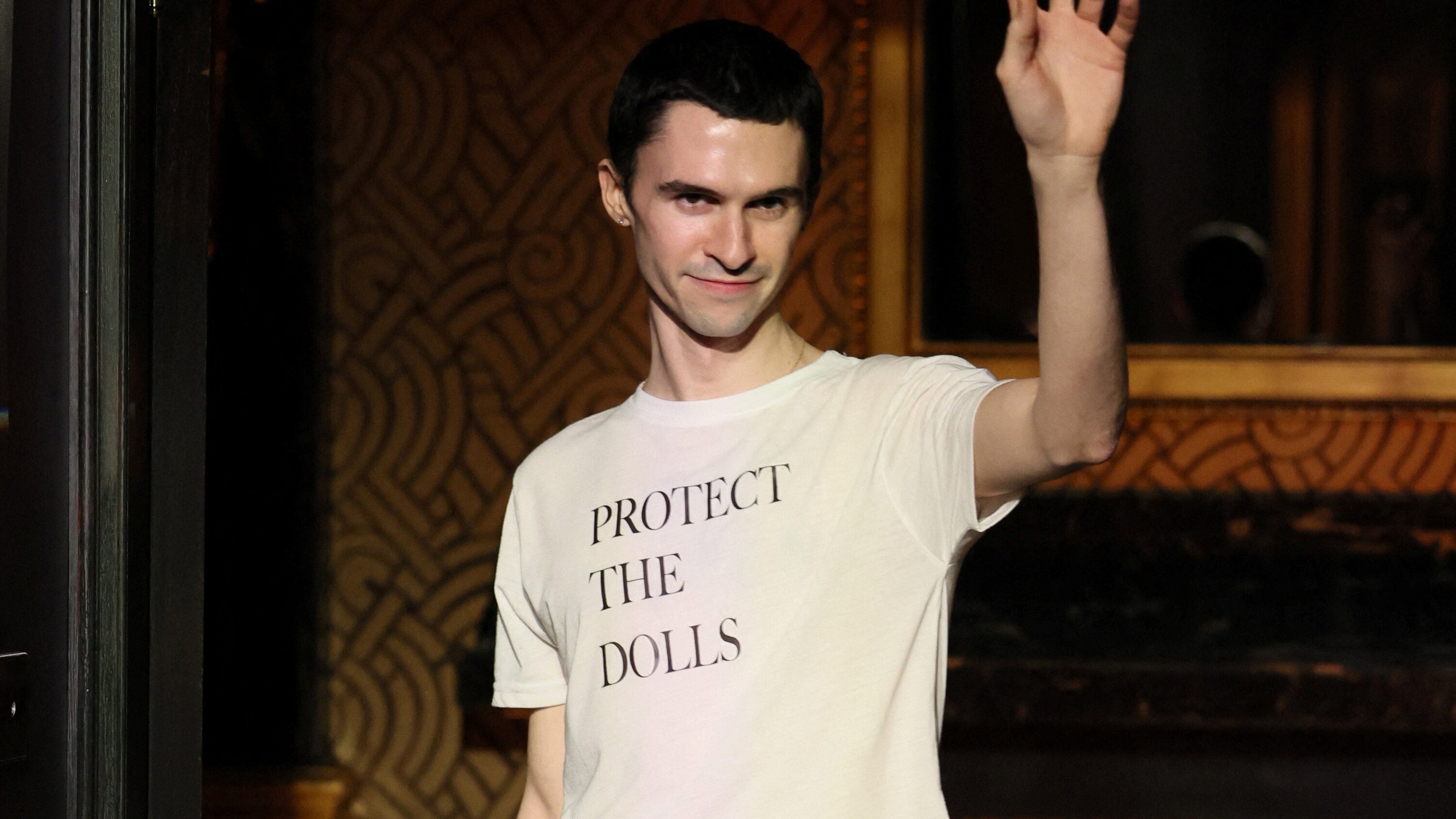
The relative safety we are offered by spaces that embrace identity politics does not result in security and, outside of these spaces, our safety is decreasingly daily. ‘Protect the dolls’ seems to me to only be about carving out safe spaces for us, which basically translates as spaces where people don’t deny our existence or right to live. Thanks, but we also need much more than protection. Pay the dolls. Allow the dolls to access healthcare. House the dolls. Get the dolls out of the carceral system.
White cis able bodied men, there is no conspiracy against you. And as identity politics continues to limp through its slow and painful death, please do not try and claim the trauma capital that you are somehow now victims worthy of pity just because a few of us ‘others’ are getting badly paid gigs in the arts. I’m not buying it.
Even sex work, the long term staple of labour options for trans people, is being framed as some privileged form of income outside of ‘regular jobs’. There are countless articles, tiktoks and viral tweets about how much one can earn on OnlyFans. After being built on the labour of sex workers, OnlyFans has changed its focus and forced a lot of these creators out. Today most top earners on OnlyFans are celebrities who found their fame off platform and use the site to promote their safe-for-work content and engage their already existing fan base. The top earners that actually use the platform for sex work are almost exclusively cis white able bodied women. The top 1% of earners account for 33% of platform income. The vast majority of content creators bring in less than $100 a month.
I’ve heard plenty of cis people who are looking for work jokingly say they might have to resort to OnlyFans, the subtext of which is that it is a deal with the devil in which you are rewarded with a magic money tree in exchange for your dignity. Sex work is work. It is just as dignified as all waged labour under capitalism, in that it is hard, alienating, often demeaning and inherently exploitative. It is also often the only option available for trans people, particularly trans people of colour.
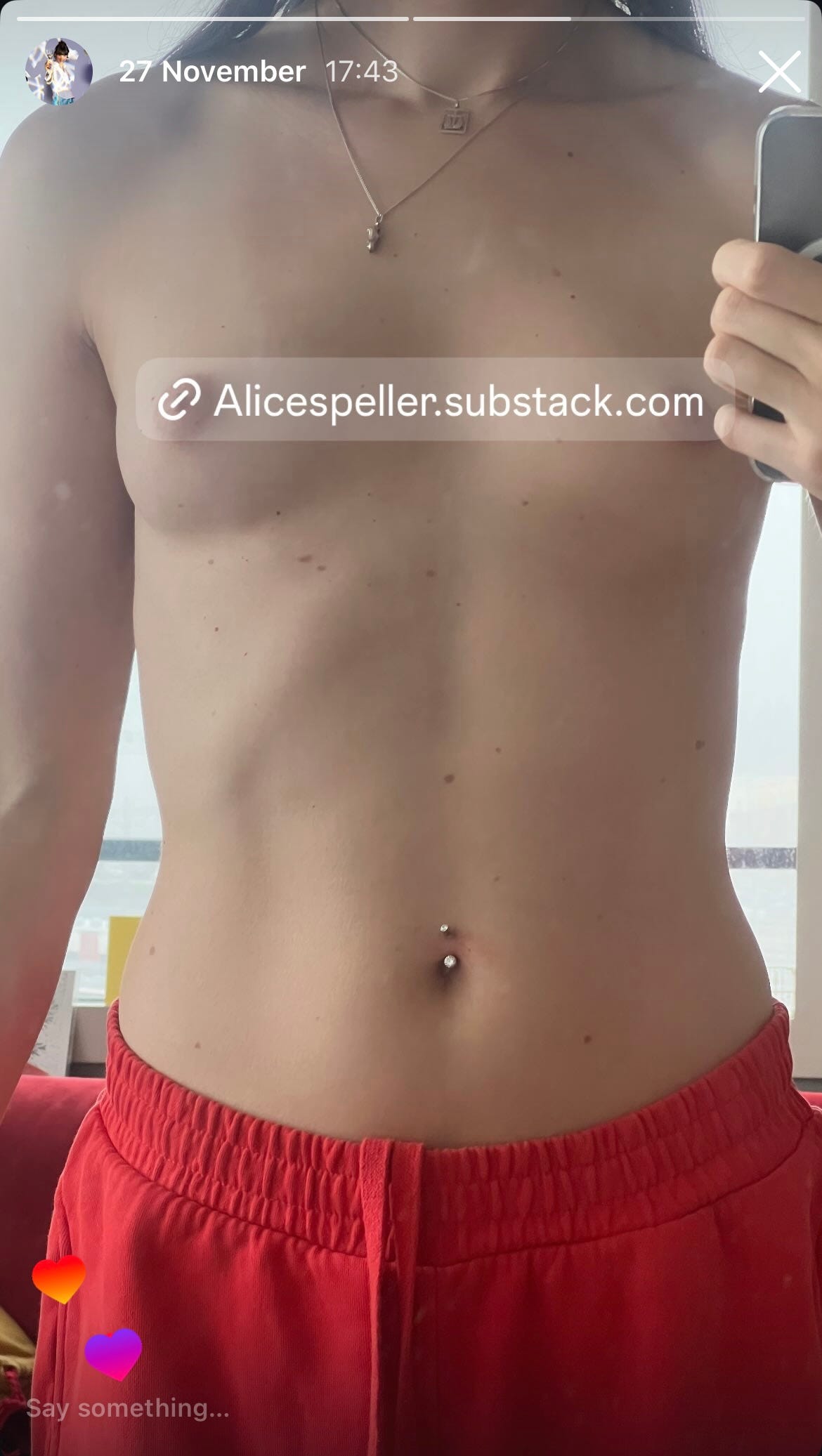
When I launched this Substack (all those days ago!), I jokingly posted on my instagram that it was a choice between starting a Substack and starting an OnlyFans. But as a trans woman trying to get noticed on this platform I’m wondering how different the two are. I have used sex to lure people to this channel. I have used my body to promote this channel. I promise to expose myself. I promise to be real. I know a certain amount of fiction, a certain amount of fantasy, is what makes it work. The more I want to monetise this channel, the more of myself I will be expected to expose. In my own description of this Substack I say that I write ‘from a place of experience, with feeling and through the body.’ Whether that ‘link in bio’ leads to OnlyFans or Substack it is always our bodies they come looking for.
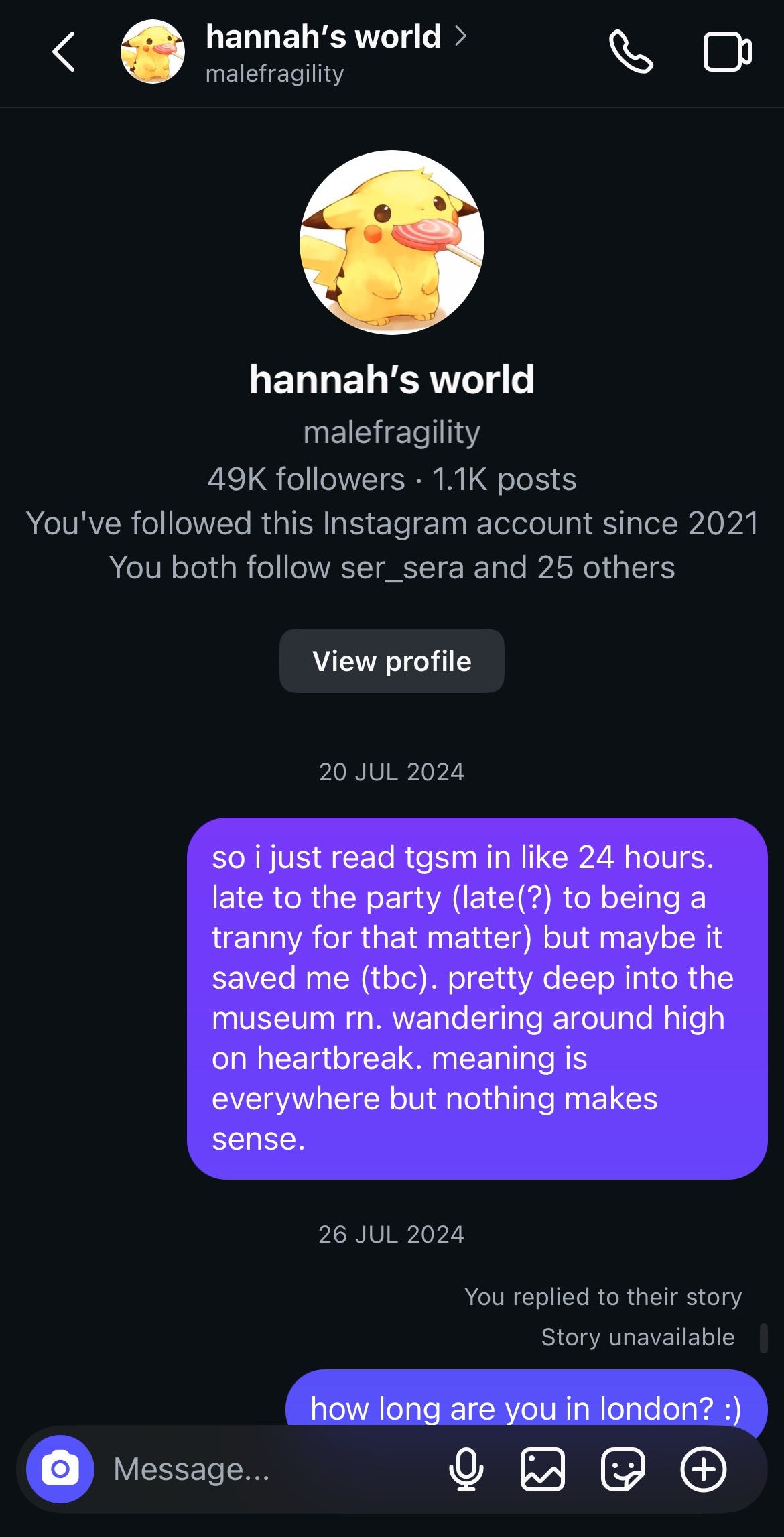
This has always been the case for trans writers. In the last century, writing by trans people was largely restricted to the tell-all sensational (and surgical) story of ‘man to bombshell’. In more recent years a small group of mostly elite educated white trans people have been permitted to ‘re-imagine the trans memoir.’ Which basically means we now have a handful of trans memoirs which indulge in long literary descriptions of ketamine consumption. Don’t get me wrong, some of these books got me through my early transition, I even DM’d Hannah Baer to inform her she had saved my life (lol). But if it is not our bodies we are exposing it is our suffering or, framed more generously, our courage. Either way it is for the consumption of a largely cis audience.
Trans and gender variant people have always been forced into the most dangerous, precarious and marginalised forms of labour, particularly those trans people in which class and/or race also intersect. The arts and literature are significantly less dangerous or marginalised than doing sex work. They are incomparable on these terms, let me make that clear. But it is striking that we are largely permitted to operate in these precarious fields only when we make work about our bodies or our suffering.
Whilst there is a growing audience of trans people who want to consume content made by other trans people, we do not have the material means to sustain this market alone. If I wanted to paywall this Substack barely anyone in my trans audience is financially stable enough to pay for it and I wouldn’t want to charge them anyway. I would have to rely on the deeper pockets of my cis readership. We do not have the power of the pink pound and so we remain in the margins, unlike the assimilationist faction of cis homos, who (for now) are permitted to have class ambitions of entering the bourgeoise.
I could end by penning a conclusion that romanticises working from the margins but that would be a lie and is counterrevolutionary. I’d rather you stay angry.